Social Media Marketing Strategies for Small Businesses: A Complete Guide to Growing Your Business Online
Introduction
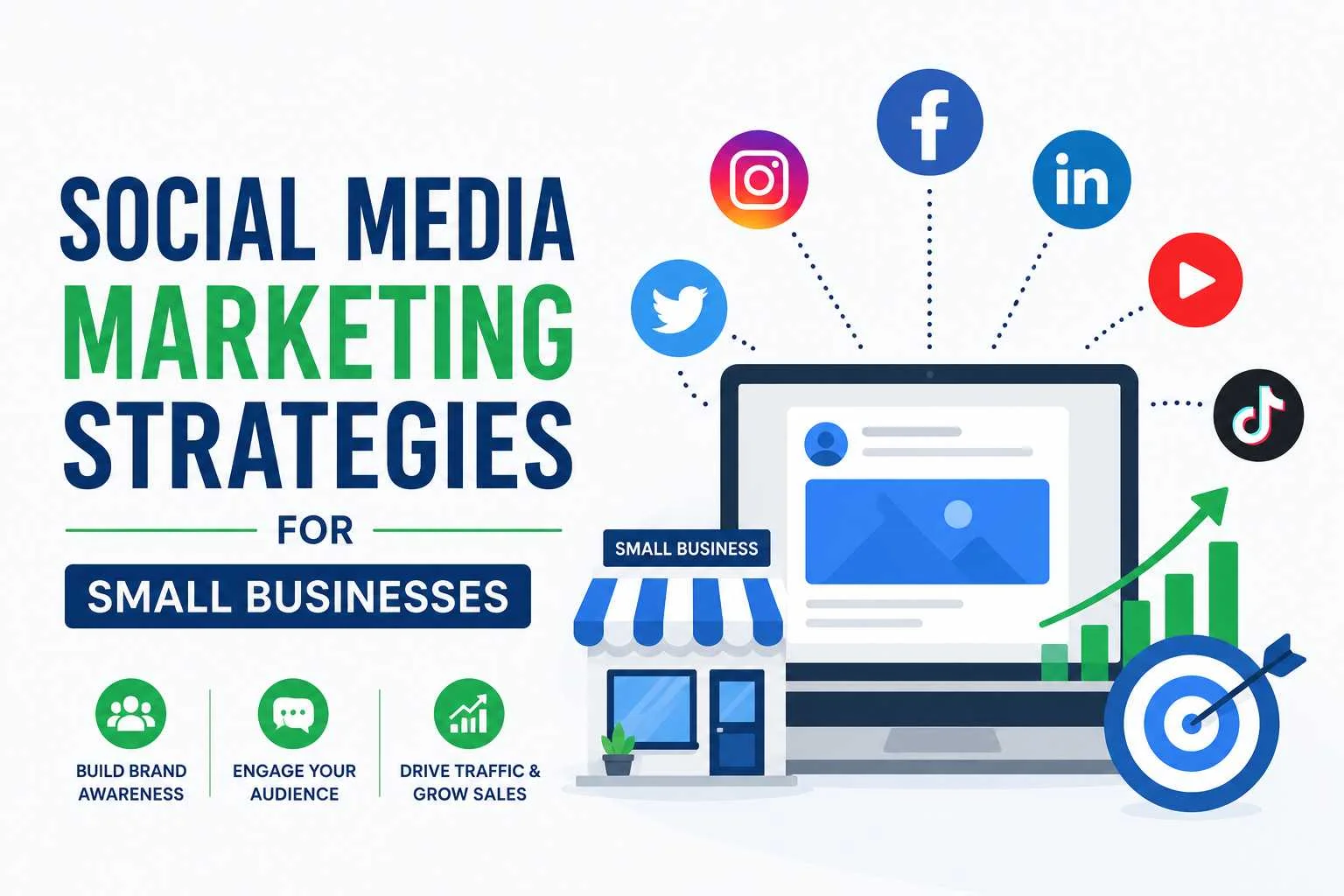
In today’s digital age, social media has become one of the most powerful tools for small businesses to connect with customers, build brand awareness, and drive sales. With billions of active users across platforms like Facebook, Instagram, LinkedIn, YouTube, and TikTok, social media offers businesses an affordable and effective way to reach their target audience.
However, simply creating social media profiles is not enough. To achieve meaningful results, businesses need a well-planned strategy that focuses on creating valuable content, engaging with followers, and consistently building relationships with potential customers.
Whether you’re a local business, startup, or service provider, implementing the right social media marketing strategies can help you increase visibility, generate leads, and grow your business without spending a fortune on traditional advertising.
In this guide, we’ll explore the most effective social media marketing strategies for small businesses and how you can use them to achieve long-term success.
Best Social Media Marketing Strategies for Small Business Growth
Social media has transformed how businesses communicate with customers. Unlike traditional marketing, social media allows brands to interact directly with their audience in real time.
Benefits of Social Media Marketing
- Increases brand awareness
- Generates qualified leads
- Drives website traffic
- Builds customer trust and loyalty
- Improves customer engagement
- Supports SEO and content marketing efforts
- Provides cost-effective advertising opportunities
For small businesses with limited marketing budgets, social media offers a level playing field to compete with larger brands.
Understanding Your Target Audience
Before posting content, it’s important to understand who your audience is and what they expect from your business.
Ask Yourself:
- Who are my ideal customers?
- What challenges do they face?
- Which social media platforms do they use?
- What type of content do they engage with?
- What solutions can my business provide?
Understanding your audience helps create content that attracts attention and encourages engagement.
1. Choose the Right Social Media Platforms
One of the biggest mistakes small businesses make is trying to be active on every platform.
Instead, focus on the platforms where your target audience spends the most time.
Best For:
- Local businesses
- Service providers
- Community engagement
- Lead generation campaigns
Best For:
- Fashion brands
- Restaurants
- Fitness businesses
- Lifestyle and visual content
Best For:
- B2B companies
- Professional services
- Consulting firms
- Corporate networking
YouTube
Best For:
- Tutorials
- Product demonstrations
- Educational content
- Brand storytelling
TikTok
Best For:
- Creative brands
- Younger audiences
- Short-form video content
Choosing the right platform ensures your efforts are focused and effective.
2. Create a Consistent Content Strategy
Consistency is one of the most important factors in social media success.
Businesses that post regularly stay visible and maintain stronger relationships with their audience.
Content Types to Include
Educational Content
Help your audience solve problems and learn something valuable.
Examples:
- How-to guides
- Industry tips
- Tutorials
- Expert advice
Promotional Content
Showcase your products and services strategically.
Examples:
- Special offers
- New service launches
- Limited-time discounts
- Product highlights
Behind-the-Scenes Content
Give customers a look inside your business.
Examples:
- Team activities
- Office culture
- Project updates
- Company events
Customer Success Stories
Build credibility by sharing real customer experiences.
Examples:
- Testimonials
- Case studies
- Reviews
- Before-and-after results
A balanced content strategy keeps your audience engaged without overwhelming them with sales messages.
3. Focus on High-Quality Visual Content
Visual content consistently performs better than text-only posts.
People are naturally drawn to attractive images and videos.
Effective Visual Content Includes
- Professional photos
- Infographics
- Reels
- Short videos
- Carousel posts
- Animations
High-quality visuals help increase engagement, shares, and brand recognition.
Why Video Content Matters
Video content continues to dominate social media platforms because it:
- Captures attention quickly
- Improves engagement rates
- Increases reach
- Builds trust
- Encourages shares
Short-form videos are particularly effective for educating and entertaining audiences.
4. Engage With Your Audience
Social media is not just about posting content—it’s about building relationships.
Customers appreciate businesses that interact with them.
Ways to Increase Engagement
- Reply to comments
- Respond to direct messages
- Ask questions
- Conduct polls and surveys
- Host live sessions
- Encourage user-generated content
The more engagement your content receives, the more likely social media algorithms are to promote it.
5. Use Social Media Advertising
Organic reach can be limited, especially on competitive platforms.
Paid social media advertising allows businesses to reach highly targeted audiences and generate results faster.
Benefits of Social Media Ads
- Increased visibility
- Better audience targeting
- More website traffic
- Higher lead generation
- Improved conversion opportunities
Popular Advertising Platforms
- Facebook Ads
- Instagram Ads
- LinkedIn Ads
- YouTube Ads
- TikTok Ads
Even a modest advertising budget can help small businesses attract new customers.
6. Build Trust Through Social Proof
People trust recommendations from other customers more than traditional advertisements.
Types of Social Proof
- Customer reviews
- Testimonials
- Case studies
- User-generated content
- Success stories
Sharing positive experiences from real customers helps establish credibility and encourages others to do business with you.
7. Optimize Your Social Media Profiles
Your profile is often the first thing potential customers see.
Professional Branding
Use consistent:
- Logos
- Brand colors
- Cover images
Clear Business Description
Explain:
- Who you are
- What services you offer
- How customers can benefit
Contact Information
Include:
- Phone number
- Email address
- Website URL
Strong Call-to-Action
Examples:
- Contact Us Today
- Request a Free Quote
- Visit Our Website
An optimized profile makes it easier for users to connect with your business.
8. Leverage Hashtags Strategically
Hashtags help increase the visibility of your content.
Hashtag Best Practices
- Use industry-related hashtags
- Combine popular and niche hashtags
- Avoid irrelevant hashtags
- Research trending topics
Well-chosen hashtags help your content reach users who are interested in your industry.
9. Monitor Performance and Analytics
Successful social media marketing requires continuous improvement.
Key Metrics to Track
Reach
The number of people who see your content.
Engagement Rate
Likes, comments, shares, and interactions.
Click-Through Rate (CTR)
The percentage of users who click on links in your posts.
Lead Generation
The number of inquiries or conversions generated through social media.
Follower Growth
The rate at which your audience is expanding.
Analyzing performance data helps identify what’s working and where improvements are needed.
10. Stay Updated With Social Media Trends
Social media platforms constantly evolve, and businesses must adapt to remain competitive.
Emerging Social Media Trends for 2026
- AI-generated content assistance
- Short-form video marketing
- Influencer partnerships
- Personalized customer experiences
- Social commerce
- Interactive content
- Community-driven marketing
Businesses that embrace new trends can gain a significant competitive advantage.
Common Social Media Marketing Mistakes to Avoid
Many small businesses struggle because they make avoidable mistakes.
Inconsistent Posting
Irregular activity reduces visibility and engagement.
Focusing Only on Sales
Constantly promoting products can drive followers away.
Ignoring Customer Interactions
Failing to respond to comments and messages can damage trust.
Using Low-Quality Visuals
Poor-quality content reflects negatively on your brand.
Not Tracking Results
Without analytics, it’s impossible to improve performance effectively.
Avoiding these mistakes can significantly improve your social media results.
How Social Media Supports Business Growth
When implemented correctly, social media marketing helps businesses:
- Build a strong brand presence
- Attract potential customers
- Generate leads consistently
- Improve customer relationships
- Increase website traffic
- Drive sales and revenue
The key is to focus on providing value, building trust, and maintaining consistency.
Benefits of Social Media Marketing for Small Businesses
| Benefit | Business Impact |
|---|---|
| Brand Awareness | Improves online visibility |
| Customer Engagement | Builds stronger relationships |
| Website Traffic | Generates more visitors |
| Lead Generation | Increases sales opportunities |
| Customer Trust | Enhances brand credibility |
| Cost-Effective Marketing | Maximizes marketing ROI |
| Business Growth | Supports long-term success |
Conclusion
Social media marketing has become an essential part of business growth for small businesses. With the right strategy, businesses can reach their ideal audience, strengthen customer relationships, and generate leads without requiring a massive marketing budget.
Success on social media doesn’t happen overnight. It requires consistent effort, quality content, audience engagement, and continuous optimization. By focusing on the strategies outlined in this guide, small businesses can create a strong online presence and achieve sustainable growth in an increasingly digital marketplace.
Whether you’re just starting or looking to improve your current social media efforts, now is the perfect time to invest in a strategy that helps your business stand out and connect with customers more effectively.
Frequently Asked Questions (FAQs)
1. Which social media platform is best for small businesses?
It depends on your audience. Facebook and Instagram work well for most local businesses, while LinkedIn is ideal for B2B companies and professional services.
2. How often should small businesses post on social media?
Posting 3–5 times per week consistently is generally more effective than posting daily without a clear strategy.
3. Do small businesses need paid social media advertising?
While organic content is important, paid advertising can help reach more targeted audiences and generate faster results.
4. What type of content performs best on social media?
Videos, educational content, customer success stories, behind-the-scenes content, and interactive posts often generate the highest engagement.
5. How can social media generate leads?
Social media attracts potential customers, builds trust, directs traffic to your website, and encourages users to contact your business or request information.
Key Takeaway
Social media marketing is one of the most cost-effective ways for small businesses to grow online. By creating valuable content, engaging with customers, leveraging paid advertising, and using the right platforms strategically, businesses can increase brand awareness, generate qualified leads, and achieve long-term success.