Rebranding: When and Why Businesses Should Consider It
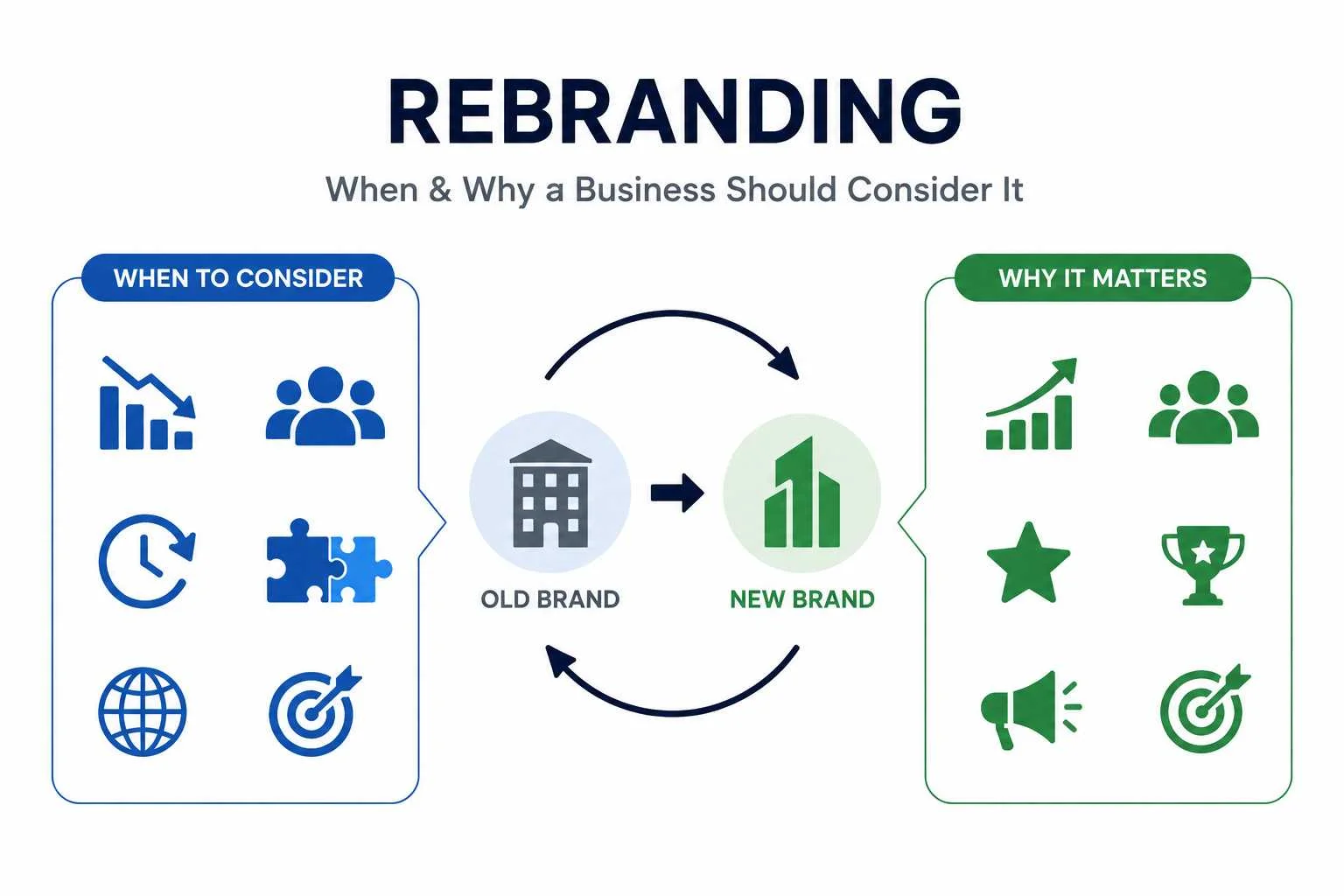
Introduction
Every business starts with a vision, a logo, a name, and a message that represents its identity. However, as markets evolve and customer expectations change, a brand that once felt modern and relevant may no longer reflect the company’s goals or values. This is where rebranding becomes an important business strategy.
Rebranding is more than changing a logo or choosing new colors. It involves refreshing how a business presents itself to customers and how it is perceived in the marketplace. When done correctly, rebranding can help businesses attract new customers, strengthen their market position, and support long-term growth.
What is Rebranding?
Rebranding is the process of updating or transforming a company’s brand identity.
Rebranding May Include Changes To
- Logo design
- Brand colors
- Business messaging
- Website design
- Visual identity
- Brand voice
- Marketing materials
The goal is to create a stronger connection with the target audience and better represent the business.
Why Rebranding Matters
A strong brand helps customers recognize, trust, and remember a business.
Benefits of Rebranding
- Improve brand perception
- Stay relevant in changing markets
- Attract new customers
- Differentiate from competitors
- Support business growth
Companies that adapt to market changes often remain competitive for longer periods.
Signs Your Business May Need Rebranding
Your Brand Looks Outdated
Design trends and customer expectations change over time.
If your logo, website, or marketing materials look old-fashioned, customers may view your business as outdated as well.
Consider Rebranding If
- Your website looks old
- Competitors appear more modern
- Your visual identity no longer reflects your business
Your Business Has Evolved
Many businesses expand their services over time.
Your current branding may no longer represent what your company actually offers.
Example
A company that started with SEO services may now offer:
- PPC Advertising
- Social Media Marketing
- Web Design
- Branding Services
Your brand should reflect your full capabilities.
You’re Targeting a New Audience
Businesses often expand into new markets or customer segments.
Rebranding can help create a stronger connection with your new target audience.
Benefits
- Improved customer engagement
- Better brand positioning
- Increased market reach
Your Brand Lacks Differentiation
If customers struggle to understand what makes your business unique, rebranding may be necessary.
Ask Yourself
- What makes our business different?
- Why should customers choose us?
- Is our value proposition clear?
A strong brand helps answer these questions instantly.
Negative Brand Perception
Sometimes businesses experience reputation challenges that affect customer trust.
A thoughtful rebranding strategy can help rebuild credibility and create a fresh start.
Focus Areas
- Improved messaging
- Better customer experience
- Stronger communication
Benefits of Rebranding
Stronger Brand Recognition
A modern and professional brand identity makes it easier for customers to remember your business.
Advantages
- Increased visibility
- Better recall value
- Stronger market presence
Improved Customer Trust
Customers often associate professional branding with professionalism and quality service.
Trust Builders
- Consistent messaging
- Professional design
- Clear communication
Better Competitive Positioning
Rebranding can help your business stand out in a crowded marketplace.
Key Benefits of Rebranding
- Stronger differentiation
- Increased credibility
- Better customer attraction
Increased Business Growth
A refreshed brand can create new opportunities for expansion.
Growth Opportunities
- New customer acquisition
- Market expansion
- Higher conversion rates
Key Elements of a Successful Rebrand
Update Your Brand Identity
Your visual identity should reflect your business goals and target audience.
Include
- Modern logo
- Updated colors
- Consistent typography
- Professional graphics
Refine Your Brand Message
Customers should quickly understand what your business does and how it helps them.
Your Messaging Should Be
- Clear
- Consistent
- Customer-focused
- Easy to understand
Improve Your Website
Your website is often the first impression customers have of your brand.
Focus On
- Modern design
- Fast loading speed
- Mobile responsiveness
- Easy navigation
Maintain Consistency
Every customer touchpoint should reflect the new brand identity.
Keep Consistent Across
- Website
- Social media
- Email marketing
- Business profiles
- Marketing materials
Consistency strengthens brand recognition.
Common Rebranding Mistakes to Avoid
Many businesses make avoidable mistakes during the rebranding process.
Avoid These Mistakes
- Rebranding without a clear strategy
- Ignoring customer feedback
- Changing everything too quickly
- Inconsistent brand messaging
- Neglecting website updates
- Failing to communicate changes
A successful rebrand requires planning and execution.
How to Know if Your Rebrand is Successful
Monitor key performance indicators after launching your new brand.
Metrics to Track
- Website traffic
- Customer engagement
- Lead generation
- Brand awareness
- Social media growth
- Customer feedback
Positive improvements in these areas often indicate a successful rebranding effort.
Key Takeaways
- Rebranding helps businesses stay relevant and competitive.
- It involves more than just changing a logo.
- Businesses should consider rebranding when their identity no longer reflects their goals.
- A strong rebrand improves trust, visibility, and growth opportunities.
- Consistency is essential across all marketing channels.
- Strategic planning is critical for success.
Conclusion
Rebranding is a powerful strategy that helps businesses adapt to changing markets, customer expectations, and growth opportunities. Whether your brand feels outdated, your services have expanded, or you’re targeting a new audience, a well-executed rebrand can strengthen your market position and improve customer perception.
The most successful rebranding efforts focus on clarity, consistency, and customer needs. By carefully updating your visual identity, messaging, and digital presence, your business can create a stronger brand that supports long-term growth and success.