AI Content Writing: Benefits and Challenges in 2026
Introduction
Artificial Intelligence (AI) has become one of the most powerful technologies transforming digital marketing. From blog writing and social media content to advertisements and email campaigns, businesses are increasingly using AI-powered writing tools to improve their content creation process.
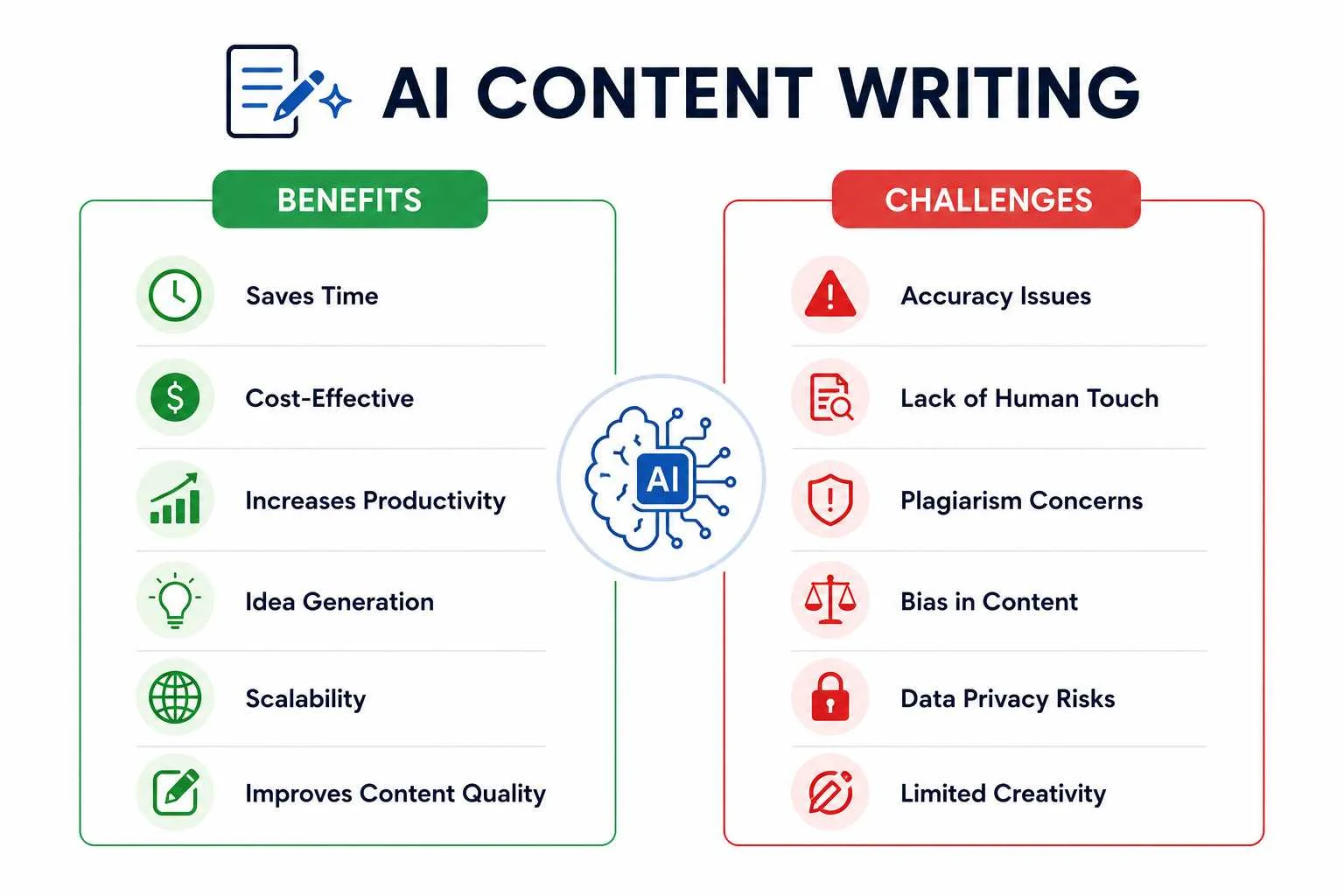
AI content writing helps marketers generate ideas, create drafts, improve productivity, and reduce the time required to publish content. However, despite its advantages, AI also comes with challenges related to creativity, accuracy, and brand authenticity.
The future of content marketing is not about choosing between AI and human writers. Instead, businesses can achieve better results by combining AI technology with human creativity and expertise.
In this guide, we will explore the benefits, challenges, and best practices of AI content writing and how it can improve modern digital marketing strategies.
What is AI Content Writing?
AI content writing is the process of using artificial intelligence tools and language models to create written content based on specific instructions or prompts.
AI writing tools can help create:
- Blog articles
- Website content
- Social media captions
- Product descriptions
- Email campaigns
- Advertisement copy
- Video scripts
- SEO content
AI supports marketers throughout the content creation process, including research, brainstorming, writing, editing, and optimization.
Why AI Content Writing is Growing Rapidly
Businesses today need to publish high-quality content consistently to compete online. Managing large amounts of content manually can be time-consuming and expensive.
AI helps businesses overcome these challenges by improving speed, efficiency, and scalability.
Major Reasons Businesses Use AI Writing Tools
- Increasing demand for content
- Faster content production
- Lower content creation costs
- Improved marketing workflows
- Better content planning
- Automated writing assistance
As digital competition continues to grow, AI content writing has become an important part of modern content marketing strategies.
Benefits of AI Content Writing
1. Faster Content Creation
One of the biggest advantages of AI writing tools is speed.
AI can create content drafts, outlines, and ideas within minutes, helping marketers save valuable time.
Benefits Include:
- Faster blog creation
- Quick content research
- Reduced workload
- Improved publishing consistency
This allows businesses to maintain a regular content schedule and reach their audience more effectively.
2. Generates Fresh Content Ideas
Many writers and marketers experience creative blocks while planning content.
AI tools can generate ideas for:
- Blog topics
- Headlines
- Content structures
- Social media posts
- Marketing campaigns
Fresh ideas help businesses create engaging content and maintain a strong online presence.
3. Improves Content Productivity
AI can handle repetitive writing tasks, allowing marketers to focus on strategy and creativity.
Examples include:
- Meta descriptions
- FAQ sections
- Email drafts
- Social media captions
- Product descriptions
This improves workflow efficiency and helps marketing teams produce more content in less time.
4. Supports SEO Content Creation
AI writing tools can assist businesses in creating search engine-friendly content.
SEO Advantages:
- Keyword suggestions
- Content structure improvements
- Topic research
- Meta title ideas
- Content optimization recommendations
When combined with proper SEO techniques, AI can help improve search visibility and organic traffic.
5. Cost-Effective Content Solution
Creating a large content team can be expensive, especially for startups and small businesses.
AI helps reduce content production costs while maintaining a consistent publishing strategy.
Useful For:
- Startups
- Small businesses
- Freelancers
- Marketing agencies
AI allows businesses to scale their content marketing efforts more efficiently.
6. Creates Multiple Content Formats
AI can transform one piece of content into different formats.
For example, a blog article can become:
- Social media posts
- Email newsletters
- Video scripts
- LinkedIn content
- Advertisement copy
This helps businesses maximize the value of their content.
Challenges of AI Content Writing
Although AI provides many benefits, it also has limitations that marketers must consider.
1. Limited Human Creativity
AI can generate information quickly, but it may struggle with original thinking, emotional storytelling, and unique perspectives.
Common Issues:
- Generic content
- Repetitive wording
- Limited creativity
- Lack of personal experience
Human editing is necessary to add originality and personality.
2. Accuracy and Fact-Checking Issues
AI-generated content may sometimes include incorrect or outdated information.
Before publishing, businesses should verify:
- Statistics
- Facts
- Industry updates
- Technical information
Fact-checking ensures reliable and trustworthy content.
3. Difficulty Maintaining Brand Voice
Every business has a unique communication style.
AI may not fully understand a company’s:
- Brand identity
- Audience expectations
- Marketing tone
- Industry language
Human review helps maintain consistency and authenticity.
4. Risk of Similar or Generic Content
AI tools can sometimes create content that feels similar to existing material.
Ways to Improve Uniqueness:
- Add personal insights
- Include original examples
- Share industry experience
- Customize AI-generated drafts
Unique content improves user engagement and SEO performance.
5. Weak Emotional Connection
Successful marketing content often depends on storytelling and emotional connection.
AI-generated content may lack the human touch needed to connect deeply with audiences.
Adding the following can improve engagement:
- Customer stories
- Real examples
- Personal experiences
- Expert opinions
How to Use AI Content Writing Effectively
The best approach is to use AI as a support tool rather than a complete replacement for human writers.
Human + AI Content Strategy
Use AI For:
- Topic research
- Content ideas
- First drafts
- Content outlines
- SEO suggestions
Use Humans For:
- Editing
- Brand messaging
- Storytelling
- Fact verification
- Final optimization
This combination creates high-quality and trustworthy content.
Best Practices for AI Content Writing
1. Create Clear Prompts
Better instructions produce better results.
Include:
- Target audience
- Content purpose
- Preferred tone
- Word limit
- Important topics
Detailed prompts help AI generate more accurate content.
2. Always Edit AI Content
Never publish AI-generated content without reviewing it.
Check:
- Grammar
- Accuracy
- SEO structure
- Readability
- Brand consistency
Editing improves content quality.
3. Add Human Expertise
AI-generated content becomes more valuable when combined with real experience.
Include:
- Industry knowledge
- Case studies
- Customer examples
- Practical advice
This creates more useful and trustworthy content.
4. Focus on User Intent
Content should solve problems and provide value instead of only targeting keywords.
Ask:
- Does this answer the reader’s question?
- Is the information useful?
- Does it solve a problem?
Helpful content performs better in search engines.
AI Content Writing and SEO
AI can support SEO strategies, but quality remains the most important ranking factor.
SEO Best Practices:
- Use keywords naturally
- Write helpful content
- Optimize headings
- Improve readability
- Answer search intent
- Update old content regularly
Search engines focus on valuable information rather than whether content was created manually or with AI assistance.
Common AI Content Writing Mistakes to Avoid
Businesses should avoid:
- Publishing AI content without editing
- Depending completely on AI
- Ignoring accuracy checks
- Keyword stuffing
- Creating generic articles
- Losing brand identity
- Forgetting audience needs
Avoiding these mistakes helps businesses maintain credibility and trust.
Key Takeaways
- AI content writing improves speed and productivity.
- AI helps generate ideas and automate repetitive tasks.
- AI supports SEO and digital marketing strategies.
- Human creativity is still essential.
- Editing and fact-checking are necessary.
- Brand voice should always be maintained.
- AI works best as a content assistant.
- Human and AI collaboration creates stronger content.
Conclusion
AI content writing is changing the future of digital marketing by making content creation faster, easier, and more scalable. Businesses can use AI tools to improve productivity, generate ideas, and support SEO strategies.
However, AI still has limitations related to creativity, accuracy, and emotional storytelling. The most successful content strategies combine AI efficiency with human expertise.
By using AI responsibly and focusing on creating valuable content for users, businesses can improve engagement, increase online visibility, and achieve long-term digital marketing success.